
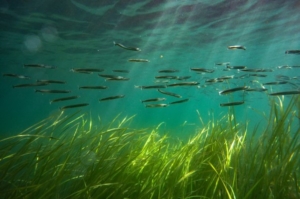
Source: Heather Hamilton, Marine Conservation Society.
Dive into Ecology – Divecrew’s Marine Ecology & Conservation Series
When we think of underwater habitats, tropical coral reefs and towering kelp forests often spring to mind. But hidden beneath the waters around Britain are some equally important ecosystems: seagrass meadows.
Although they might look like patches of underwater grass, these habitats are actually made up of flowering marine plants. Unlike seaweed, seagrass has roots, leaves, flowers and underground stems called rhizomes, which spread through the seabed and help anchor the plants in place.
Two recognised native seagrass species are found in UK waters: common eelgrass (Zostera marina) and dwarf eelgrass (Zostera noltei). They grow in shallow coastal environments, from permanently submerged seabeds to intertidal areas exposed at low tide.
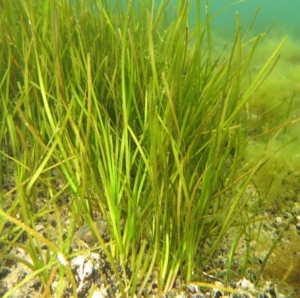
Dwarf Eelgrass (Zostera noltei).
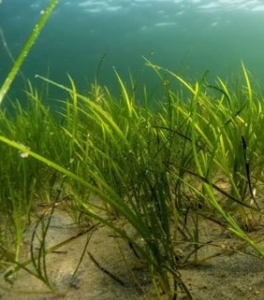
Common Eelgrass (Zostera marina)
A nursery beneath the waves
Seagrass meadows are incredibly important for marine wildlife. Their dense leaves provide shelter, feeding grounds and nursery habitats for a variety of species, particularly young fish that need somewhere to hide from predators.
Look closely and you might find pipefish, juvenile fish, crabs, shrimps and small molluscs moving between the leaves. Britain’s native seahorses are also associated with seagrass habitats, using the vegetation to anchor themselves with their prehensile tails.
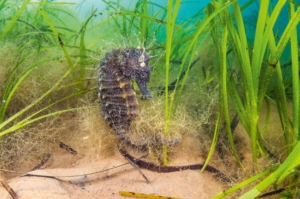
A female Spiny seahorse (Hippocampus guttulatus) in a seagrass meadow. (Zostera marina) Studland Bay, Dorset.
(Image credit: Nature Picture Library)
For divers, these meadows offer an opportunity to discover a completely different underwater world. What might initially look like a simple patch of vegetation can actually support an entire community of marine life.
More than just a home for wildlife
Seagrass does far more than provide shelter. These plants absorb carbon dioxide through photosynthesis, with carbon becoming stored in the surrounding seabed sediments. This is known as blue carbon.
Their leaves also help slow water movement, while their extensive root systems stabilise the seabed and reduce sediment disturbance. This makes seagrass an important habitat for coastal protection and healthy marine ecosystems.
A habitat under pressure
Despite their importance, Britain’s seagrass meadows have suffered significant declines. Research estimates that at least 44% of UK seagrass has been lost since 1936.
Pollution, poor water quality, coastal development, dredging and physical damage from anchors and boat moorings have all contributed to their decline. Climate change and rising sea temperatures create additional pressures.
There is, however, reason for optimism. Conservation organisations and researchers are working to restore seagrass habitats around the UK, including projects involving seed collection and planting new meadows
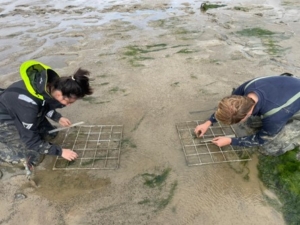
Source: Project Seagrass
What can divers do?
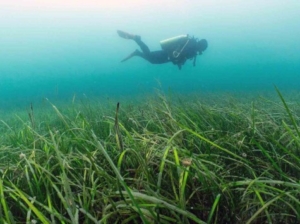
Seagrass meadow in Falmouth, Cornwall (Source: Steve Weinman)
Seagrass is surprisingly delicate, and even accidental contact can damage its leaves and underground root systems.
Maintaining good buoyancy, avoiding contact with the seabed and observing wildlife without disturbing it are simple ways divers can help protect these habitats.
The next time you’re exploring a shallow coastal environment, take a moment to look a little closer. Those swaying green leaves could be supporting an incredible variety of marine life.
Our underwater forests might not always be the most obvious habitats, but they are certainly among the most important.
Explore it. Understand it. Protect it.
Dive into Ecology is Divecrew’s marine ecology and conservation series, exploring the fascinating wildlife, habitats and environmental issues found beneath the surface.
Coming next: Britain’s Seahorses – Meet Our Two Native Species.


